Springfield Decorative Concrete Finishes
Licensed and insured · Serving Springfield, MA
Call (413) 547-4797A gray slab that looks like a sidewalk, parked right where you wanted a patio.
Decorative concrete finishes are how we get you past that, and we lay stamped, stained and colored work on patios, walkways, pool decks and garage floors around Springfield, Pine Point, East Springfield, Wilbraham and Longmeadow. Plenty of stamped concrete contractors set the mat, pull it, and call the day a win. We come back over the joints by hand, touch up the color where the release powder pooled, and only then talk about sealer.
What changes the number on colored stamped concrete is square footage, how many colors and how much hand detailing you want, whether an old slab has to come out first, and how tight the run is between the house and the fence.
Keep going and you get the method, the pricing, and the questions people ask first. Or call us at (413) 547-4797 and we will come stand on the slab with you.
Stained Concrete Floors
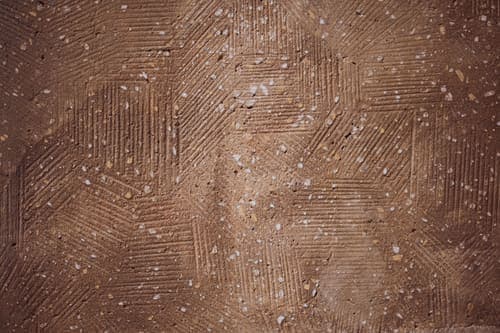
Stained concrete floors start with the slab you already own, which is why we spend the first day grinding rather than coloring. Old carpet glue, tack strip scars and whatever sealer got rolled on years ago all have to come off, or the stain lands in patches. Acid stain reacts with the lime in the cement and mottles like leather, so no two floors come out the same. Water based stains sit more even if you want a predictable tone.
Then two coats of sealer, and you stay off it for a day or so.
Rush the prep and you get mop swirls locked under the finish forever. That is usually when somebody gives up and rolls colored epoxy floor paint over the whole thing.
Square footage, the shape the slab is in, and how many colors you layer are what move the price.
Colored Concrete
Colored concrete gets its shade one of two ways on our jobs: pigment batched into the load at the plant so the color runs all the way through, or a dry shake hardener broadcast over the wet slab and floated in. Integral color means a chipped corner still looks like the rest of the slab instead of flashing gray. Hardener sits in the top eighth of an inch, denser and richer, but less forgiving.
What ruins it is water. A driver tempering the mix on site to make placing easier lightens that load, and you get a patchwork you can see from the street forever. We order tight, place fast, and cure it under blankets or a cure and seal.
Deep reds and charcoals in the pigment cost more than earth tones, and matching an existing pour adds time.
Colored Cement
Colored cement gets its shade from iron oxide pigment batched into the mix at the plant, so the color runs all the way through the slab instead of sitting on the surface. Scrape it with a grill or clip an edge with a shovel and what shows underneath is the same color.
Where it goes wrong is water. One truck arrives wetter than the last, or somebody sprinkles the surface to make troweling easier, and you get pale streaks and cloudy blotches that no sealer will ever hide. So we hold the slump steady load to load, finish the whole pour on the same schedule, and cure it evenly instead of letting the sun cook one half.
Deep charcoals and reds carry far more pigment than tans, and that pigment load moves the price more than anything else on the job.
Colored Stamped Concrete
Colored stamped concrete lives or dies on timing, so that's where my crew puts its attention. We place your slab with integral color mixed right in, broadcast a release powder for the antique shading, then press the mats while the surface is still in that short window. Stamp too early and the pattern sinks and blurs. Stamp too late and you get a faint impression that looks like a rumor of stone.
On a hot, breezy afternoon that window can close in twenty minutes, which is why we show up with enough hands to press the whole pour in one pass. We hand cut the joints, tool a clean border or decorative concrete edging around the field, then seal it. Pattern, color count, and how far we wheel mud from the truck are what move the price.
Concrete Floor Repair
Concrete floor repair is the part of the job nobody photographs, and it's the part that decides whether the pretty stuff on top lasts. On a garage slab or a basement floor, we grind back the failing surface, chase every crack open to a clean V, and fill with a polyurea or epoxy mortar that cures hard enough to take a grinder the same day. Spalling around a floor drain gets cut out to sound concrete, not feathered over.
Feathered patches pop, usually the first winter the salt comes off your truck.
Skip the moisture test and a colored epoxy floor paint will lift in sheets no matter how nice the rust oleum decorative chips looked going down.
Size, slab thickness and how bad it's got are what move the price on a repair, along with how much of your stuff we have to move to reach it. Most single-bay floors are patched, coated and walkable inside three days.
Honeycombing Concrete
Honeycombing in concrete is what you get when the mortar never worked its way around the stone, leaving a wall or a step face full of little gravel caves. Usually it's a stiff mix, a rushed pour, or nobody ran the vibrator long enough. Plenty of concrete repair companies will smear a skim coat over it and call it done.
We chip back to sound material with square edges, never feathered out to nothing, dampen it, brush in a bonding slurry and pack polymer-modified mortar in half-inch lifts. Skip that and the patch lets go by the second winter, and water sitting in those voids rusts the rebar and splits the wall from the inside. On decorative concrete finishes we repair first, then carry color across the whole panel, because a patch under stain reads like a coffee ring.
Mud Jacking Concrete
Mud jacking concrete is how we lift a sunken slab back where it belongs instead of ripping it out, and on this page it matters because it's the first thing we do before any of the decorative concrete finishes go anywhere near it. We drill a few small holes through the slab, pump slurry underneath until it rises back to level, then plug them. Most patios and walkways are lifted in a day, and you're walking on it that afternoon.
Done badly, it's a mess. Too few holes and too much pressure at the pump will crack a slab clean through, which is how a lift turns into a tear-out and a call to one of the concrete repair companies you were trying to avoid.
Slab size, how deep the void has got under it, and whether we can get a hose to the back of the house all change the number.
Colored Concrete Floors
Colored concrete floors are the ones people notice without quite knowing why: a basement rec room, a shop floor, a sunroom slab reading warm gray or terra cotta instead of the usual sidewalk look. We get that color two ways. Integral color goes in the mix at the truck so it runs all the way through, and a chip later doesn't flash white at you.
Dry shake hardener gets broadcast onto the fresh slab and troweled in, which gives a denser, tougher surface and deeper color on top.
Most failures are finishing failures. Trowel too early, or seal a slab that hasn't given up its moisture, and you get blotchy patches and a milky haze under the sealer. Colored epoxy floor paint laid over a damp basement floor peels off in sheets by the second spring. We grind, we test for moisture, then we coat.
Size, how many colors, stair access and the shape of the existing slab all move the number.
Pool Deck Color
Pool deck color has to do two jobs at once: look right next to the water, and stay cool enough to stand on barefoot in July. We keep the tones on the light side, sandy buffs, warm tans, soft grays, because a charcoal deck in full sun will cook the soles of your feet by noon and you'll be hopping to the grass like a Fenway sausage on the grill.
Cool deck colors for pools hold up best when the color is integral to the mix or broadcast into the fresh slab as a hardener, not rolled on afterward. Painted concrete around pool edges is what fails first, since chlorine, salt and wet feet peel it inside a couple of seasons and the flakes end up in your skimmer. We finish with a knockdown texture and a grit-loaded sealer so it grips wet.
Pool Deck Paint Colors
Pool deck paint colors are really a question of how hot that slab gets at two in the afternoon, not which chip looks nicest on the sample card. The cool deck colors for pools are the pale ones: sand, bone, soft gray, light tan. Charcoal looks sharp for about a week, then it cooks bare feet every August and the kids stop using the deck.
We roll textured acrylic coatings for grip, and we've put down Dyco pool deck paint colors, Behr decorative concrete stain and Rust-Oleum decorative chips over the years, depending on the slab and what you want to look at.
Painted concrete around a pool fails at the prep, almost every time. Coating over chlorine residue, or over a slab still pushing moisture up from below, gets you peeling by the second summer. We grind or etch, patch, then two coats with real cure time between them. Size, how much failed coating has to come off, and whether cracks need chasing first all show up in the estimate.
Decorative Concrete Edging
Concrete edging is the low band that separates your beds from the lawn, and nearly every failed one I get called to replace let go at the bottom, not the top. We dig the trench past the soft topsoil, cut out roots, tamp the base, then run the curb machine or hand form the tighter curves by the walk.
Color goes into the mix, never brushed on after, because paint on an outdoor curb peels its second winter once water works underneath. We tool control joints every few feet so a hard freeze cracks it where we cut instead of at random. A run of decorative concrete curbing around a front bed will take a day. Length, how many curves, and how much sod and root has to come out first are what change the price.
Dyco Pool Deck Paint Colors
Folks call asking for Dyco pool deck paint colors by name, usually after standing on a deck that peeled in sheets by mid August. Whatever is on the label, this job is mostly prep. We degrease, grind or etch so the slab will actually grip the coating, fill the spalled spots, and make sure it is dry underneath, because painted concrete around pool water traps moisture and pushes the film straight back off.
Then two rolled coats, a day apart.
Cool deck colors for pools stay light for a reason. A sand or pale tan tone is still walkable barefoot at three in the afternoon; charcoal will cook the soles of your feet. If the deck is chewed up rather than just tired, a textured topping wears better than paint, and concrete pool deck colors go into that topping instead of sitting on it.
Square footage, how many old coats have to come off, and the condition of the slab all shift what it takes.
What the job involves
The job involves far more prep than color. Decorative concrete finishes live or die on the slab underneath, so we start by grinding off old sealer, adhesive and whatever Behr decorative concrete stain or Rust-Oleum decorative chips somebody rolled on a few summers back, then patch the low spots and chase every crack we can find. Color goes down in layers, and each layer needs its own dry time.
Rush that and you get a blotchy floor that looks great on day one and flakes off in sheets by the first thaw.
Add decorative concrete edging or curbing and you've added form work and a day.
Square footage, how the machines get in, how much old coating has to come off and the humidity that week are what move the price. Most homes take two to four days, plus cure time.
What it costs
What decorative concrete finishes cost on your property comes down to things I can size up in twenty minutes on site. Square footage first. Then how many colors and patterns are in play, because a one color broom finish and a colored stamped concrete patio with a soldier course border and hand tooled grout lines are not the same day's work. Ripping out a failed slab adds a day.
Access moves it too: if the only route to the back is a three foot gate, every yard goes in by wheelbarrow. Decorative concrete edging and curbing get figured by the running foot, not the square. Give us a ring at (413) 547-4797 with rough dimensions and we can get close over the phone. Late season pours also need blankets and a longer cure before anything gets sealed.
When decorative concrete finishes are the wrong fix
Sometimes decorative concrete finishes are the wrong fix, and you should hear that from me before anybody mixes color. A slab that has dropped at a corner, heaved, or split wide enough to catch your toe needs the structure sorted first. Stain and stamping only dress it up.
Painted concrete around pool aprons is the worst of it: water works under the coating, winter pushes it back up, and the whole thing sheets off, so a fresh pool deck color buys you one swim season and no more. Behr decorative concrete stain and Rust Oleum decorative chips want sound, dry concrete under them, and so does resurfacing.
Where concrete flatwork is spalled clear through, or concrete steps rock off their footings, concrete removal and a new pour costs you less over ten years. What shifts that cost is how much has to leave the yard and how close we can back a truck in.
Why choose us for this
You want decorative concrete finishes done once, by somebody who finishes, and then you don't think about that patio again for years. Not a job you supervise. Not a crew you chase back for the last few feet of decorative concrete edging by the steps.
I won't put color on a slab that's still giving up moisture. Seal over damp concrete and you get a milky blush and peeling, and then the whole surface has to come off and be done twice.
We're rarely the cheapest of the stamped concrete patio companies you'll call, and that's why: a single skimpy coat of sealer instead of two, a cure cut short, and the color looks tired by the second summer.
Size, truck access, the shape the slab is already in and the time of year all shift what this runs. Coming out to look costs you nothing.
Frequently asked questions
Will decorative concrete finishes crack the slab I already have?
Not if the slab is sound. We stain, stamp and overlay concrete pool decks and garage floors that are already down, and the only prep that touches the surface is a grind or an acid etch. If we find hollow spots or working cracks, that's concrete floor repair first, color second.
What does a stamped concrete patio cost?
Square footage moves it most, then access for the truck, then how many colors and whether you want decorative concrete edging around the border. Late fall pours need blankets, which adds labor.
Do I need a sealer or a full resurfacing?
Sealer refreshes an existing pool deck color and buys you a few winters. Resurfacing means a quarter inch of overlay bonded over spalled concrete, which is what colored stamped concrete needs once the surface has gone sandy.
Contact The Springfield Concrete Company now
Contact us now, before you settle on a pattern, because the slab you already own decides half the job. Decorative concrete finishes sit differently on a sound patio than on one shelling at the edges, and I'd rather stand on it than guess off a photo you text me. Plenty of folks call after three stamped concrete patio companies gave them three different stories.
Call (413) 547-4797 and we'll walk it together, from Indian Orchard to the hill streets, and I'll tell you straight whether you want a stamp, a stain, a chip broadcast floor, or concrete floor repair first.
What shifts the number is square footage, how many colors go down, whether concrete pool deck colors have to work around a fence and a pump, and the shape the old surface is in.